Two federal judges have now ruled that Google is an illegal monopolist. Neither one broke anything up.
The second one was September 2, 2026. Judge Leonie Brinkema’s remedies order in the ad tech case was two pages long, said no to all three structural fixes the Justice Department wanted (selling AdX, open-sourcing the auction logic in Google’s publisher ad server, a backup sale of the rest of that ad server later on) and said yes to most of the behavioral ones with changes. The judge sealed the reasoning. So for two weeks everybody knew the answer and nobody knew why, until the 106-page opinion came out Wednesday.
Her line is that a breakup is “neither realistic nor needed.” The government never found a buyer for AdX, a sale could have dragged on for years. The case for one, in her words, “boils down to a lack of trust.” I read that sentence a few times. Yes? That’s sort of the point? This is the same court that found in April 2025 that Google illegally monopolized the publisher ad server and ad exchange markets and illegally tied them together. Not trusting them afterward doesn’t seem like a stretch to me.
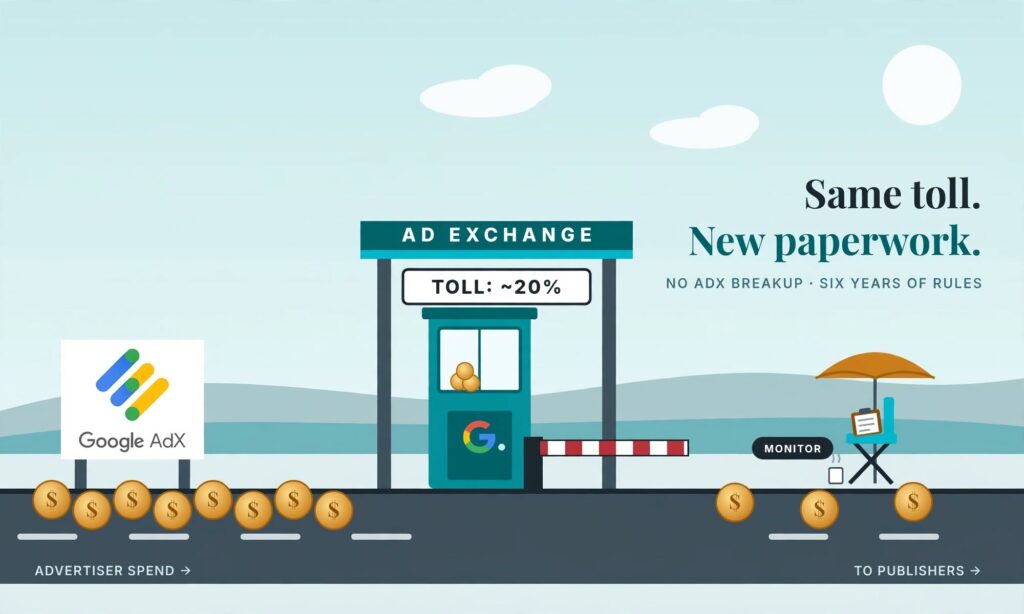
Anyway, what Google has to do instead. Six years of it, the number Google itself proposed, versus the 15 the government wanted, though the court can extend it. Rival publisher ad servers get access to AdX’s real-time bids. AdX and the ad server get plugged into Prebid. Publishers on Google’s ad server don’t have to use AdX anymore and can export their data. Google Ads can’t favor Google’s own ad tech when it bids. There’s a monitor, and it’s worldwide, which Google fought and lost. It’s basically a list of rules plus somebody checking on them, the kind of thing you’d set up for a teenager. I doubt this works when the exchange takes roughly up to 20% of what publishers earn.
We did almost exactly this dance a year ago with the search remedies. Monopoly confirmed, Chrome stays, conduct rules, advertisers get close to nothing. Ad tech always looked like the better shot to me. AdX is a separate business you could actually sell, which was never true of search. If it didn’t happen here I’m not expecting a breakup anywhere in this space for a long time.
Most of this case was argued from the publisher side, and most of the remedies are about helping publishers compare bids and leave. Advertisers sit on the other side of the same auction, though, and that part got talked about a lot less. Every time we run display through Google Ads, Display Network, Demand Gen, the display slice of Performance Max, some of that money runs through AdX before it reaches a publisher. Whatever AdX keeps never turns into an impression. If competition actually shows up and the take rate drops, more of our clients’ spend ends up as media.
That’s the whole upside for buyers, and it’s real, but it’s indirect. Not every change cuts our way, either. Google already dropped Unified Pricing Rules last December, so publishers can set different price floors for different buyers again. Good for publishers. For us it could mean paying more on some sites than whoever’s bidding next to us, and we’d mostly have no idea.
And it’s slow. Prebid integration is a big engineering job, the estimates I’ve seen are a year or longer, and Google says it’ll appeal the liability ruling, which could push it out further. Late 2027 at the earliest before anyone can tell. I’m going to keep an eye on open-web CPMs and how much of our display spend actually lands as media, because those are the numbers that should move. A monitor filing reports doesn’t count. I’d love to be wrong about all this, for the record. Back in 2024 we wrote about the first search ruling and wondered what it would really mean for the people buying ads. Two years, two rulings, and I’m still kind of wondering.
Update, October 2026: The two sides filed a joint proposed final judgment on October 2, but they still disagree on deadlines, with the government asking for six months to open AdX bids to rival ad servers and Google asking for twelve. As of early November the judge had not signed the final judgment, so the clock on any of this hasn’t even started.