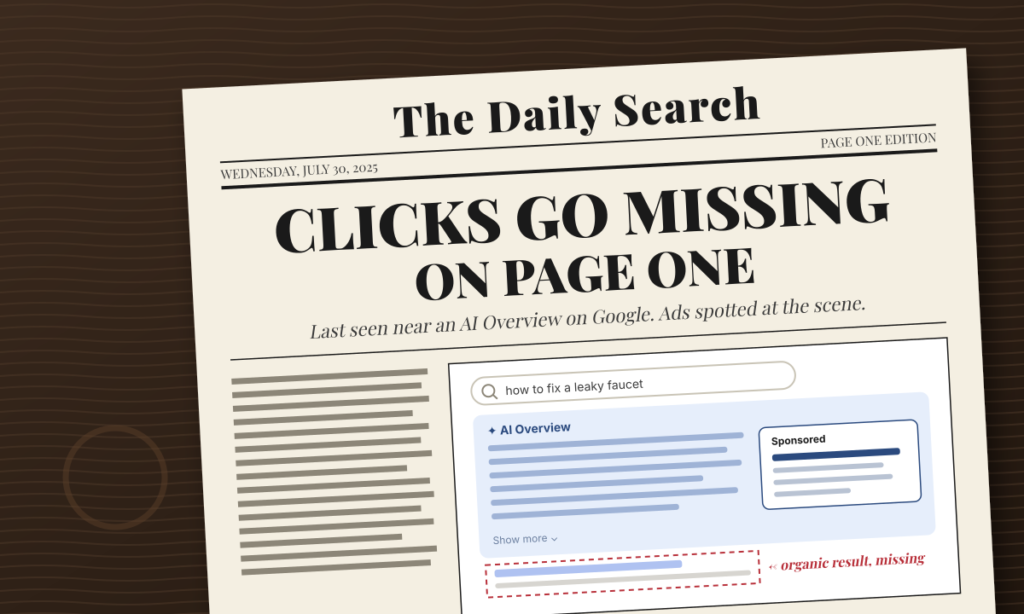
Pew Research put out a study last week that finally puts real numbers on something most of us in search have been feeling for months. After tracking the browsing of 900 U.S. adults, Pew found people clicked a traditional search result on 8% of searches that showed an AI summary, compared to 15% when there wasn’t one. Clicks on the links inside the summary itself? About 1%. People were also more likely to just end their browsing session after seeing one.
Google pushed back the same day, calling Pew’s methodology flawed and its query set unrepresentative, and saying it hasn’t seen big drops in overall traffic to websites. Maybe so. But Google is the only one holding the data that would settle it, and it hasn’t published any.
How We Got Here
Google started putting ads into AI Overviews on mobile in the U.S. in October 2024, though you’d have had a hard time actually finding one. At Google Marketing Live in May 2025 it expanded them to desktop, started testing ads in AI Mode, and said more English-speaking markets would follow later this year.
None of this should surprise anyone who read our 2015 gripe about truncated mobile ads. Google has been squeezing the space between the question and the answer for a decade. AI Overviews just finish the job.
Where The Clicks Went
When the answer sits at the top of the page, the informational click that used to go to somebody’s blog post just doesn’t happen. What’s left is commercial intent, packed into fewer clicks, plus a brand new ad slot sitting inside or right under Google’s answer. In its Q2 2025 earnings, Alphabet reported last week that search revenue grew by double digits again. Organic traffic took the hit. The ad business didn’t.
So yes, I think Google is monetizing the clicks it stopped sending, just not in the way the headline suggests. It isn’t selling the same click back to you. It’s selling a spot next to the answer that replaced the click, and that’s a different product with a different value that nobody has really measured yet. Pew didn’t separate paid clicks from organic ones, and Google certainly isn’t going to.
Update, November 2025: Somebody finally measured the paid side, and it’s worse than I guessed. Published industry research covering about 3,100 informational queries from 42 organizations found paid CTR on searches showing an AI Overview dropped 68% between June 2024 and September 2025. Organic was down 61%. The one bit of good news: brands that got cited inside the AI Overview saw 35% more organic clicks and 91% more paid clicks than brands that didn’t. So what Google’s summary says about you now affects your ads too, which is a little maddening when you think about it.
What You Can’t See
Here’s my real problem with it. Only Performance Max, Shopping and Search campaigns using broad match, including AI Max, are eligible to show in AI Overviews and AI Mode. There’s no segment in the reporting for those placements and no way to opt out of them. We can’t see which clicks came from inside an AI Overview, what we paid for them, or whether they converted.
That should sound familiar. Last year we wrote about the unreported search terms bucket that was quietly getting more expensive on brand campaigns. This is the same thing in a new spot. And notice the eligibility list. To get into the newest inventory on the page you have to run the most automated campaign types Google sells, which is exactly the trade we warned about when AI Max launched in May.
Update, November 2026: Still waiting. After Google Marketing Live this past May, Google’s Ads Liaison confirmed ads in AI Overviews and AI Mode are still lumped in with every other top-of-page ad in reporting, with no separate breakdown, and Google is apparently still figuring out what AI-specific reporting should even look like. In the meantime the ad formats inside AI Mode got a lot more ambitious, which I wrote about here.
What We’re Doing About It
We’re splitting search terms into informational and commercial buckets and tracking CTR on each separately, because a blended account CTR hides almost all of this. On one account, CTR on informational queries that now trigger an AI Overview is down 71.6% year over year, while CTR on purchase-intent queries improved 19.3%.
Informational terms where CTR has collapsed are getting their bids cut or getting pulled entirely. That budget goes toward bottom-funnel terms, with one caveat. Every other Advertiser is reading the same studies and doing the same thing, so expect CPCs on those terms to climb. We’re also watching broad match and Performance Max closely for informational queries creeping back in through the side door, since those are the campaign types eligible for the new placements in the first place. And we’re getting the SEO and paid teams in the same room more often, because what Google’s summary says about you is starting to matter on both sides of the page.
The way I see it, Google didn’t really stop sending clicks. It moved them closer to the register. Whether that’s a good deal for Advertisers, I honestly can’t tell you yet, because the number we’d need to figure it out is the one Google won’t show us.